
 English
  Français
 Español
Noticias de la industria
MENU

Si buscas una auténtica silla ergonómica , deja de contar las palancas de ajuste. La verdadera prueba es si la silla sigue la curva natural de su columna en el momento en que se sienta y mantiene ese apoyo durante una cena larga, una tarde de lectura o una videollamada completa. Ese tipo de apoyo no es un privilegio de las sillas de oficina de malla. Puede construirse en madera maciza y, a menudo, es más fácil de verificar porque la geometría es fija, no ajustable mecánicamente. VICO, un fabricante de muebles con más de veinte años de experiencia y que exporta a más de 100 países, aborda la ergonomía de esta manera: si una silla es adecuada para su cuerpo debe ser medible, repetible e inspeccionable antes de que se envíe la silla.
Contenido
La capacidad de ajuste mecánico es útil, pero también tiene un punto débil. Los plásticos, los elevadores de gas y las palancas pueden aflojarse con el tiempo, lo que significa que la silla deja de mantener gradualmente la postura que usted marcó originalmente. Una silla de madera maciza funciona de manera diferente. El ángulo del respaldo, la profundidad del asiento y la altura del reposabrazos son parte del diseño mismo. Una vez fabricados la estructura y el asiento, todas las sillas del lote mantienen el mismo perfil.
Esa coherencia es importante para los compradores que están acondicionando un comedor, un estudio o un pequeño espacio de hostelería. Si una silla soporta perfectamente a un invitado en la sala de exposición, las unidades restantes deberían soportarlo de la misma manera después de la entrega. VICO controla esto seleccionando madera de fresno europea y madera certificada FSC, monitoreando cuidadosamente el contenido de humedad y combinando la fabricación de precisión con artesanía calificada. El resultado es una silla cuya ergonomía no cambia.
La parte baja de la espalda necesita una suave curvatura hacia adentro y el respaldo debe encontrarse con la columna un poco por encima del asiento para brindar un verdadero confort lumbar. Esto se logra con una inclinación de la espalda de aproximadamente 100 a 110 grados sin empujar a nadie hacia adelante. VICO diseña respaldos curvos en una amplia gama de modelos de madera, por lo que el soporte lumbar no está atornillado, sino que forma parte de la silueta.
La altura del asiento debe ser de unos 45 a 50 cm, permitiendo que ambos pies descansen sobre el suelo. La profundidad del asiento debe ser de unos 40 a 45 cm para que el borde delantero no presione la parte posterior de las rodillas. Los apoyabrazos, cuando están presentes, deben permitir que los hombros se relajen en lugar de encogerse. En una silla de madera, estas dimensiones están fijadas en el marco, lo que significa que la silla funciona para el usuario o no.
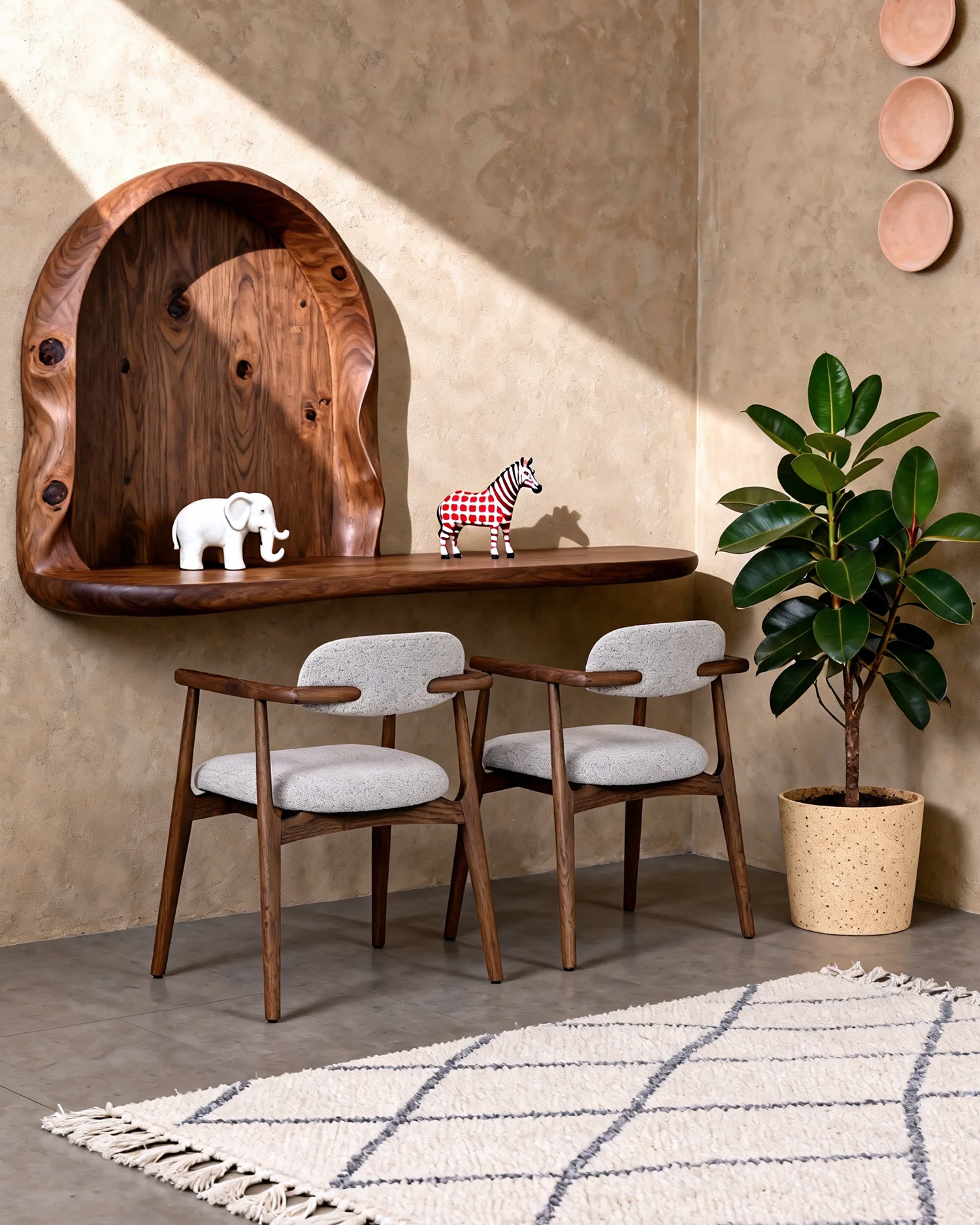 Sillón de madera maciza de fresno con asiento y respaldo tapizados Esta silla ofrece las dimensiones ergonómicas clave necesarias para una inspección rápida en la sala de exposición: una altura de asiento de 48 cm y un respaldo de apoyo, lo que facilita verificar la comodidad sin ajustes adicionales. Ver producto →
 Las especificaciones sólo son útiles cuando sabes qué medir. La siguiente tabla condensa las principales dimensiones y sus razones prácticas, para que un comprador pueda revisar una silla en una sala de exposición o en un catálogo en menos de un minuto.
| Característica | Rango de referencia | Por qué es importante |
|---|---|---|
| Altura del asiento | 45-50cm | Permite al usuario apoyar ambos pies en el suelo, reduciendo la presión debajo de los muslos. |
| Profundidad del asiento | 40-45cm | Protege la parte posterior de las rodillas y mantiene el torso erguido sin encorvarse. |
| Ángulo del respaldo | 100-110 grados | Libera la tensión en la parte inferior de la columna y apoya una postura relajada pero erguida. |
| soporte lumbar | 10-15 cm por encima de la superficie del asiento | Mantiene la curva natural hacia adentro de la parte baja de la espalda durante una sesión prolongada. |
| Grosor del cojín | Al menos 5 cm de espuma densa | Distribuye la presión de los huesos de la cadera y evita que toque fondo. |
Una silla que funciona como mesa de comedor puede no sentirse bien en la barra de un bar, y un sillón a menudo necesita un asiento más profundo y más reclinable que una silla de trabajo. La compra debe comenzar con el caso de uso, no solo con la apariencia.
Para una silla de comedor, la mayor necesidad ergonómica es la libertad de movimiento. Los usuarios se levantan y se sientan muchas veces durante la comida, por lo que el respaldo debe brindar apoyo sin que la silla sea voluminosa. La altura del asiento debe coincidir con la altura de la mesa. Para una silla de bar, el asiento debe ser más alto e incluir un reposapiés para evitar que las piernas cuelguen. VICO utiliza diferentes curvas de respaldo y profundidades de asiento para estas aplicaciones, manteniendo al mismo tiempo un lenguaje de materiales consistente en toda la gama.
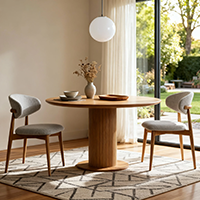
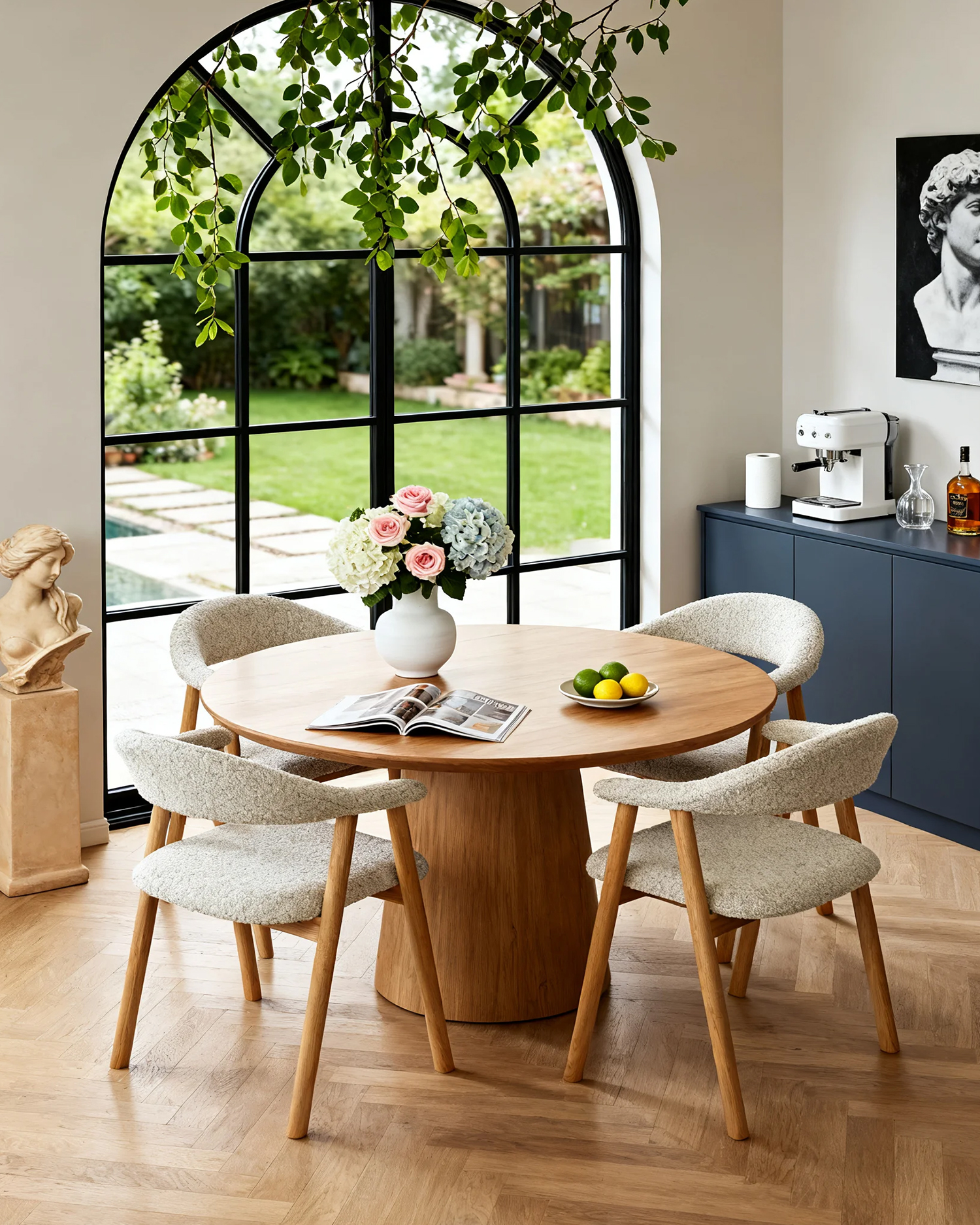
 Silla de comedor con respaldo curvo y tapicería Boucle y patas de madera de caucho Diseñado para ofrecer libertad de movimiento durante las comidas, su respaldo curvo y su altura de asiento de 46 cm brindan soporte sin volumen, adaptando mesas de comedor y espacios compactos de manera eficiente. Ver producto →
 Cuando se utiliza una silla para trabajo concentrado, el reposabrazos debe permitir que los codos permanezcan cerca del cuerpo y el asiento debe soportar largos períodos de estar sentado sin cortar la circulación. Un marco de madera esculpido con un generoso cojín puede lograrlo sin introducir piezas mecánicas. Para habitaciones compactas, las sillas de madera apilables o desmontables también facilitan la reorganización del espacio.
 Silla tapizada de madera de caucho con respaldo curvo para un trabajo concentrado Con un generoso cojín y reposabrazos integrados, esta silla admite largas sesiones de estar sentado y su resistente estructura garantiza la misma estabilidad ergonómica en todas las unidades. Ver producto →
 Para un gerente de adquisiciones, un diseñador o un propietario de marca independiente que compra a un proveedor, la ergonomía es solo una parte de la decisión. La pregunta más importante es si la fábrica puede mantener estable esa ergonomía en todas las unidades.
Pregunte sobre el control de la humedad, el abastecimiento de madera certificada y la consistencia de la espuma amortiguadora. VICO publica manuales de modelos individuales en PDF, incluidos archivos marcados con el año reciente, lo que facilita la verificación de las especificaciones antes de realizar el pedido. La selección del color también es importante en los interiores comerciales, así que compruebe si el proveedor puede combinar la silla con su espacio sin comprometer el acabado de la superficie. Puede revisar las opciones de combinación de colores de VICO aquí o leer su guía detallada sobre cómo elegir una silla ergonómica cómoda antes de comprometerse con una primera muestra.
Cuando recibas la muestra, siéntate en ella durante al menos quince minutos. Verifique el respaldo contra su espalda baja, observe si la parte delantera del asiento presiona sus piernas y confirme que sus pies toquen el piso de forma natural. Si esos tres puntos le parecen correctos, la silla seguirá sintiéndose bien después de un año de uso. Eso es lo que debería ofrecer la ergonomía de la madera: soporte honesto y predecible.